Medical Device Documentation: From Compliance Records to Regulatory Evidence
For a medical device manufacturer, documentation is more than a compliance requirement. It is the objective evidence that the product, processes and quality system remain under control.
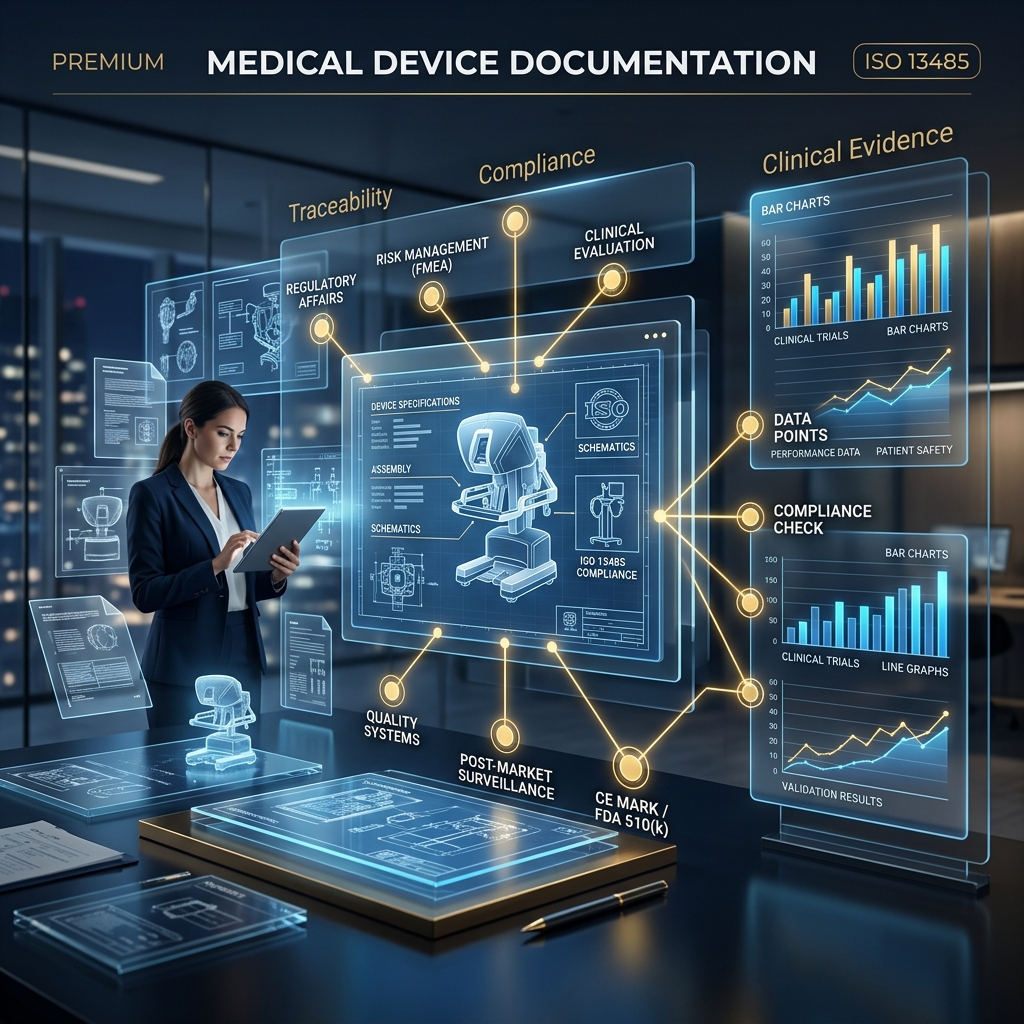
During an FDA inspection, Notified Body audit or ISO 13485 assessment, auditors do not simply look for documents. They look for consistency, traceability and objective evidence that documented processes are actually implemented.
A procedure may be well written, but if the records do not support it, the quality system can still come under scrutiny.
Where Documentation Needs the Most Attention
1. Design and Technical Documentation
Design inputs, outputs, verification, validation and product specifications should remain aligned throughout the product lifecycle. When a design change is not carried through the relevant technical records, questions can arise about which version of the device was actually assessed and released.
2. Risk Management
Risk management should evolve with the product. Complaints, CAPA, design changes, supplier changes and post-market information may all require reassessment. A risk file that accurately described the product five years ago may not accurately describe it today.
3. Process Validation
Validation should reflect the manufacturing process currently in use. Changes to equipment, materials, suppliers, software or critical parameters should be assessed for their impact on the validated state.
4. Software and V&V
For software-enabled medical devices, requirements traceability, verification, validation, configuration management and change control are critical. The manufacturer should be able to clearly demonstrate what changed, why it changed and how the impact was evaluated.
5. Supplier and Change Management
Changes originating with suppliers can affect product quality and regulatory compliance. Critical supplier, component and material changes should therefore enter the manufacturer's own evaluation and change-control process.
6. PMS, Complaints and CAPA
Post-market information should feed back into the quality system. Complaints, adverse events, trends and CAPA may influence risk management, technical documentation, clinical evidence or product changes.
The Issue Regulators Often Find: Disconnects
A documentation system becomes vulnerable when its individual records do not tell the same story.
The Traceability Chain
Technical Documentation → Risk Management → Manufacturing → Labelling → PMS
If a significant product change appears in one area but not the others, the issue is no longer simply document control. It can indicate a weakness in lifecycle management.
This is why audit readiness should focus on traceability between records, not merely on whether a document exists.
How NKB Regovanta Can Help
At NKB Regovanta, we review medical device documentation from both a regulatory and operational perspective. Our focus is to determine whether your records provide a clear and defensible picture of how the product is designed, manufactured, controlled and monitored throughout its lifecycle.