India Medical Device Rules 2026: EU-Approved Devices Gain Recognition Under Rule 63
What the latest MDR amendment means for medical device manufacturers, EU companies and Indian importers.
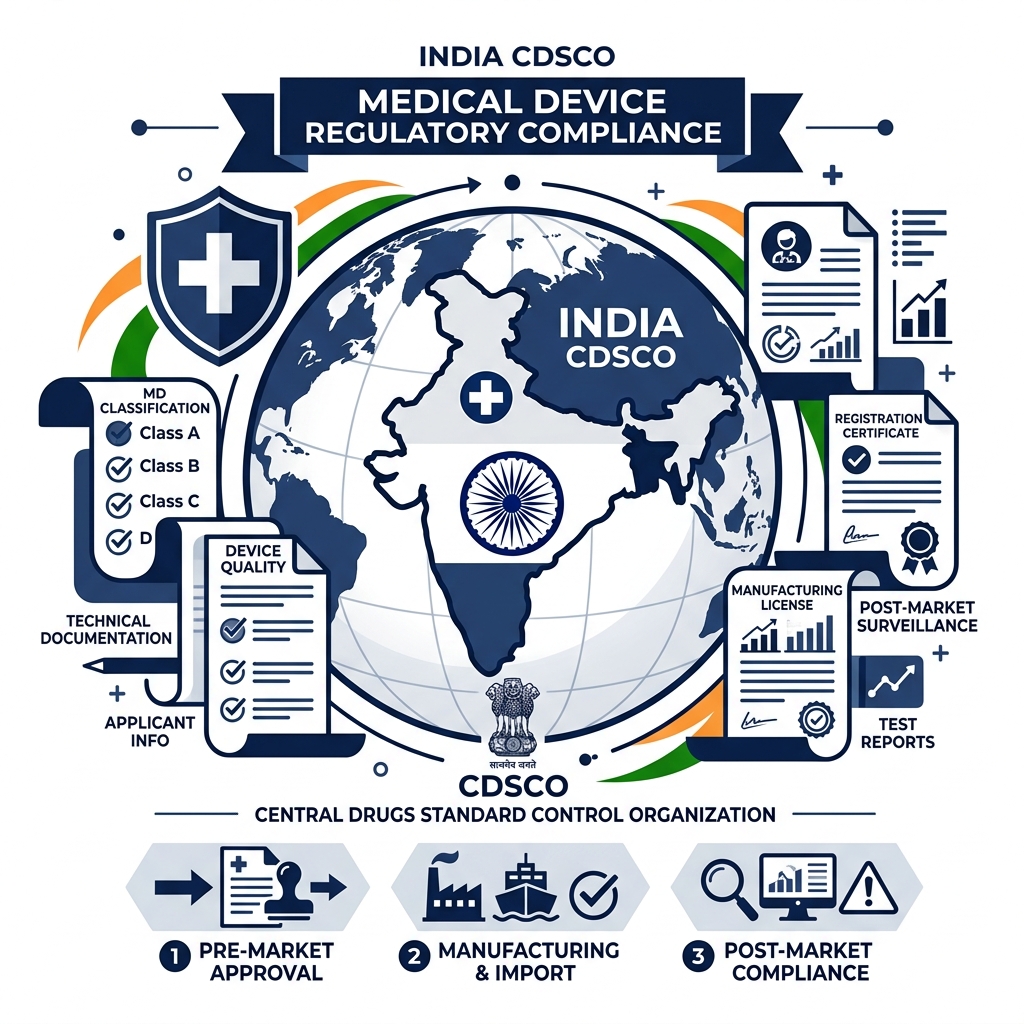
India's medical device regulatory framework has taken another important step towards greater recognition of international regulatory evidence.
The Ministry of Health and Family Welfare has notified the Medical Devices (Third Amendment) Rules, 2026 through G.S.R. 744(E), dated 14 August 2026, amending key provisions of the Medical Devices Rules, 2017.
Of particular interest to the global MedTech industry is the inclusion of European Union countries under Rule 63(1), proviso (iv). The amendment also introduces an explicit reference to Quality Management System (QMS) requirements in the provisions applicable to Class A non-sterile and non-measuring medical devices.
Opportunity, Not a Blanket Exemption:
Importantly, the amendment should not be interpreted as an automatic exemption from Indian regulatory filings. The applicability remains strictly dependent on the product classification, its European regulatory status, available technical/clinical evidence, and evaluation by the Central Licensing Authority (CDSCO).
EU Countries Added to Rule 63
One of the most significant changes introduced through the 2026 amendment is the addition of European Union countries to Rule 63(1), proviso (iv).
Rule 63 governs clinical investigation requirements for medical devices seeking approval in India, particularly novel products or devices for which a predicate device is not available in India. The amended provision now formally recognises EU regulatory approvals alongside the jurisdictions already specified under the rule (such as the US, UK, Australia, Canada, and Japan).
For an EU manufacturer planning to enter India, this creates an opportunity to examine whether its existing European regulatory approval (CE mark under MDR/IVDR) and supporting clinical data can be leveraged to waive local clinical trials in India.
However, there is an important distinction between recognition of a foreign regulatory approval for the purposes of a statutory provision and automatic acceptance by CDSCO. An EU approval does not, by itself, bypass all Indian licensing requirements. The pathway must still be assessed on a device-by-device basis.
What Should Manufacturers Assess?
Manufacturers seeking to leverage the amended Rule 63 provision should first undertake a regulatory assessment of their existing technical and clinical documentation:
- Indian Medical Device Classification: Aligning intended use with CDSCO risk classes (Class A, B, C, or D).
- Predicate Device Status: Analyzing whether an approved predicate already exists in the Indian market.
- EU Regulatory Approval Status: Verifying validity under EU MDR 2017/745 or IVDR 2017/746.
- Clinical Evidence Dossier: Reviewing clinical evaluation reports (CER), safety data, and performance testing for Indian clinical relevance.
- Risk Management & PMS: Ensuring ISO 14971 files, vigilance records, and post-market surveillance data are comprehensive.
- Manufacturing Site & QMS: Reconciling Plant Master Files (PMF) and ISO 13485 audit reports.
- Proposed Indian Indications: Ensuring the intended patient population matches the overseas authorization.
QMS Requirements for Class A Devices
The second important change concerns Class A non-sterile and non-measuring medical devices. The amendment adds “and Quality Management System” to the relevant provisions under Rules 19H and 19J.
Although Class A devices are considered low-risk and undergo simplified registration via GSR 777(E), manufacturers must not assume that compliance can be addressed solely through self-declaration. A manufacturer's quality system must demonstrate verified control over:
- Manufacturing and assembly processes
- Supplier qualification and material traceability
- Complaint handling and customer feedback
- Non-conformity management and CAPA
- Change control protocols and technical file maintenance
Manufacturers operating an established ISO 13485 quality system may already meet many of these standards, but a targeted gap assessment is advised to confirm alignment with CDSCO inspection expectations.
Government Medical Device Testing Laboratories
The amendment also updates the marginal heading of Rule 19 to “Government Medical Device Testing laboratories.”
While primarily an administrative clarification, testing remains a critical milestone in Indian regulatory filings. A common and costly mistake in regulatory planning is commissioning laboratory testing before establishing the precise regulatory pathway and standards. A well-planned testing strategy should directly substantiate the final CDSCO submission dossier rather than creating generic reports that later prove insufficient.
What Does This Mean for European Manufacturers?
For European MedTech companies, this amendment provides a compelling reason to accelerate India market-entry plans. A manufacturer with an established clinical and commercial track record in the European Union possesses substantial data that can streamline CDSCO licensing.
The first step is determining: What is the Indian regulatory pathway for this device, what does Rule 63 permit in this particular case, and how effectively can existing EU clinical evidence support an exemption from domestic trials?
Implications for Indian Importers & Manufacturers
Authorized Indian Representatives (AIR) and importers must thoroughly understand the overseas regulatory status of products they represent, ensuring that the manufacturer's CE certificate, clinical evaluation, and Free Sale Certificates (FSC) satisfy CDSCO requirements.
For domestic manufacturers, the formal inclusion of QMS requirements for Class A products reinforces that quality-system readiness is mandatory across the entire medical device spectrum.
How NKB Regovanta Can Help
NKB Regovanta provides end-to-end regulatory, clinical, testing, quality and market-access consulting across India and international jurisdictions:
- CDSCO Medical Device Registration & Licensing: Classification, regulatory pathway assessment, and preparation of MD-14/15 import licences and MD-3 to MD-9 manufacturing licences.
- Clinical Strategy & Rule 63 Assessment: Comprehensive review of EU clinical trial data and CE documentation to evaluate Rule 63 clinical investigation waiver eligibility.
- Authorized Indian Representative (AIR / IAA): Full statutory representation for foreign manufacturers on the SUGAM portal.
- Quality Management Systems & ISO 13485: QMS audit readiness, documentation alignment, and Class A self-certification compliance.
- Regulatory Due Diligence & Gap Assessment: Technical file and Plant Master File (PMF) audits before CDSCO submission.
Conclusion
The Medical Devices (Third Amendment) Rules, 2026 create a significant commercial opportunity for manufacturers holding European regulatory approvals. The inclusion of EU countries under Rule 63 expands recognized international evidence and offers a faster, more predictable route to commercialization in India.
At NKB Regovanta, we help medical device and IVD manufacturers transform regulatory shifts into clear, defensible, and accelerated market-access pathways.