Using Predicate and Material Equivalence to Avoid Repeating Biocompatibility Testing Without Regulatory Need
Client profile: Anonymized medical-device manufacturer preparing a US 510(k) where the patient-contacting materials, manufacturing/processing conditions and contact profile could be compared with legally marketed device evidence.
The Challenge
The initial submission plan assumed that a fresh biocompatibility test package was automatically required. Before commissioning testing, we assessed whether the biological safety question could be addressed through a documented bridge to existing legally marketed device information.
The commercial risk was not simply test cost: unnecessary testing could add sample preparation, laboratory scheduling and report-review time without improving the biological safety argument if the relevant materials, processing and contact conditions were already adequately supported.
The Route That Could Have Cost More Time or Money
Repeating a full biological test program before establishing whether the final finished device, patient-contacting materials, manufacturing/processing, intended use and contact profile were sufficiently aligned with existing legally marketed device information.
What We Did
- Mapped the device’s intended use and patient-contact scenario, including tissue/contact type and duration, and reviewed the formulation, additives, colorants, manufacturing/processing and sterilization information relevant to the final finished device, as applicable.
- Compared those factors with the selected legally marketed device information and assessed whether FDA’s 510(k) and ISO 10993-1 risk-based framework supported reliance on existing information rather than automatic repeat testing.
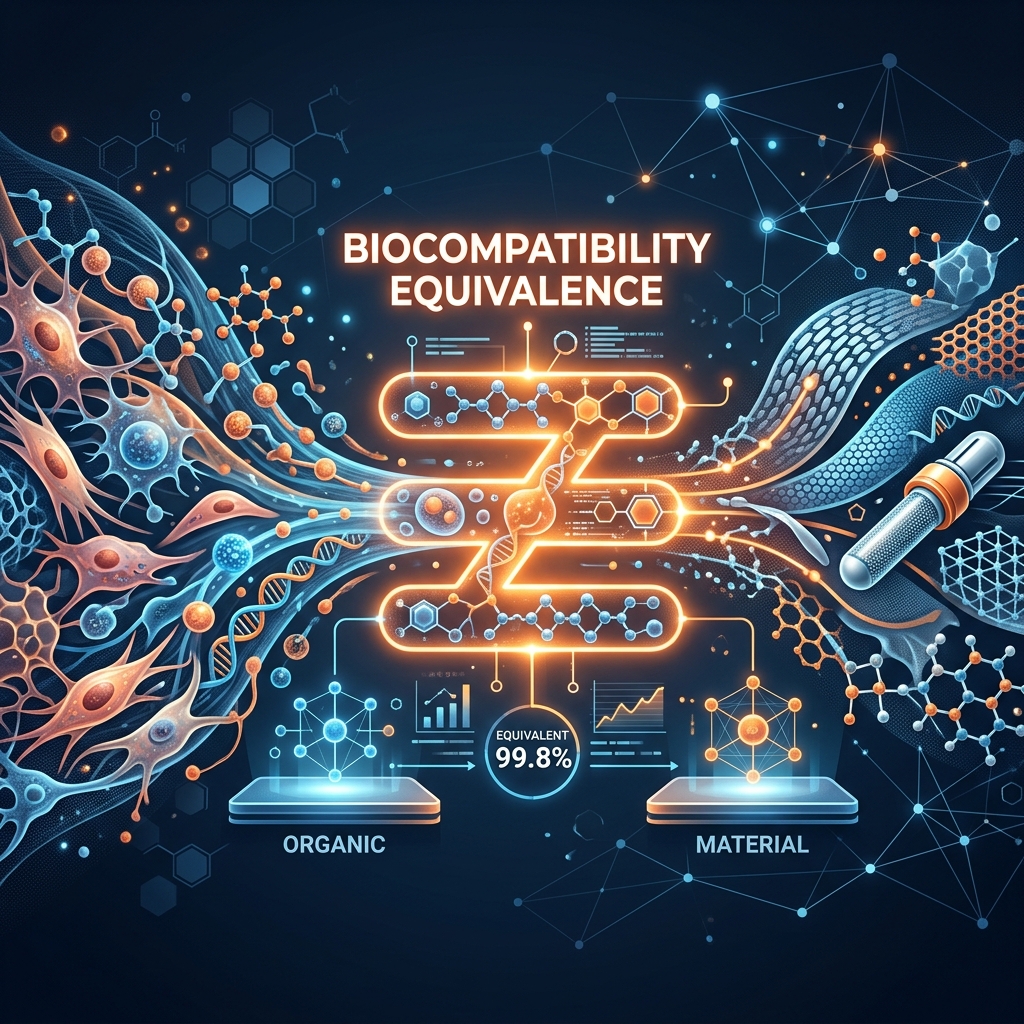
- Prepared a structured biocompatibility bridge showing what was identical or sufficiently supported, what evidence was available, and why the comparison was relevant to the biological endpoints associated with the device’s contact category.
- Flagged any differences—such as material formulation, processing, sterilization, contact type or duration—that could create a residual biological risk and therefore require additional information or testing.
- Integrated the rationale into the broader substantial-equivalence and risk-management story for the 510(k).
What NKB Did Differently
We did not start by ordering tests. We first tested the regulatory and scientific hypothesis: does the available evidence adequately cover the final finished device, materials, processing, intended use and contact profile, and are any differences biologically relevant?
How It Helped
This converted “biocompatibility testing” into a documented evidence-gap assessment. Existing evidence was leveraged only where the bridge was supportable; unresolved biological risks remained candidates for additional information or testing.
Business / Regulatory Impact
A more focused biological evaluation strategy, reduced risk of duplicate testing, and a clearer 510(k) rationale connecting intended use, patient contact, materials, processing and residual risk.
NKB Insight
Biocompatibility is a biological-safety evaluation, not an automatic testing checklist. The defensible question is whether existing evidence adequately addresses the final finished device and its contact risks—and, if not, what additional evidence is actually needed.