The Algorithm Can Do More. Should the Label?
Challenge
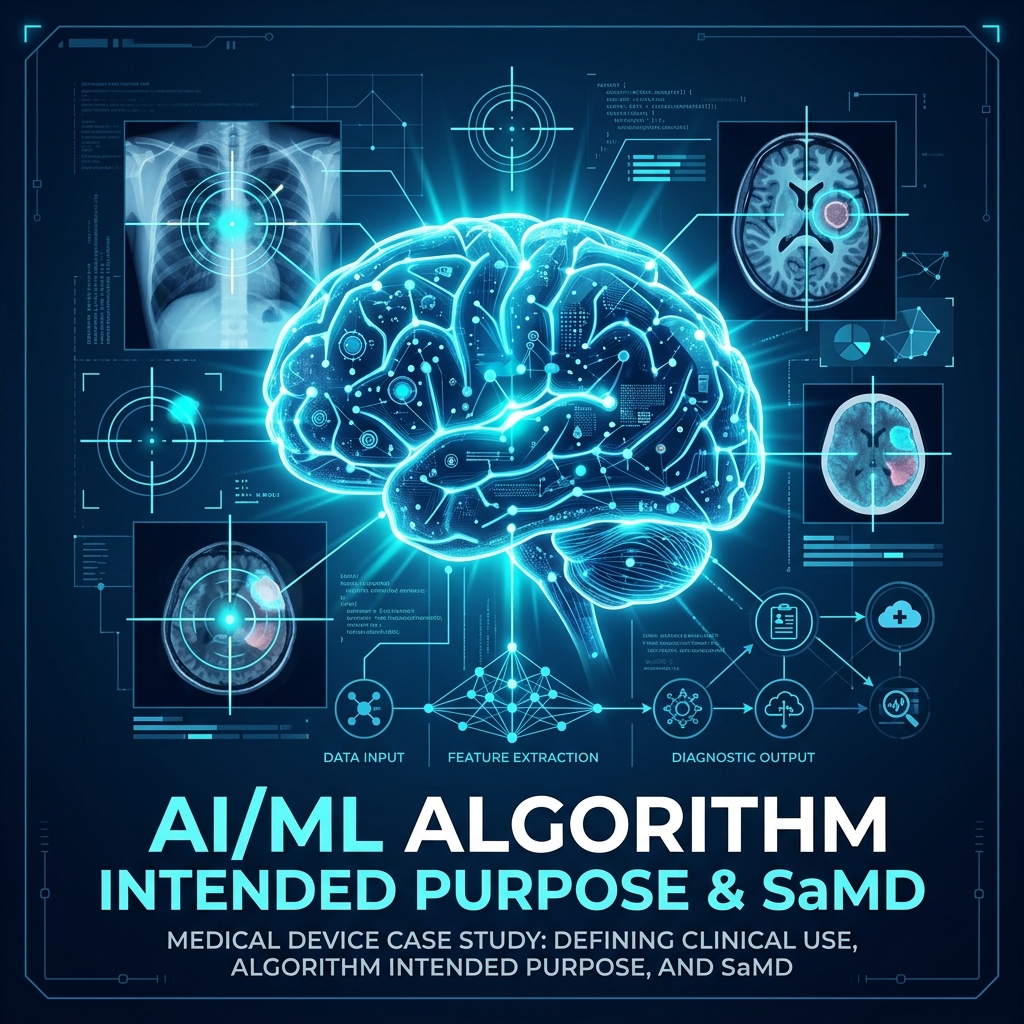
An AI/ML-enabled imaging software was developed with capabilities extending beyond its initially proposed intended purpose. The manufacturer considered expanding its claims from abnormality detection to include characterization and clinical decision support.
Each additional claim could change the software's regulatory significance, evidence requirements and EU MDR pathway. The key question was: What should the product claim—and what evidence would be required to support it?
Our Strategy
We assessed the proposed claims against the software's intended purpose, clinical function, level of influence on clinical decisions and risk profile.
The regulatory pathway was mapped through:
Intended Purpose → Clinical Function → Risk → Classification → Evidence
This distinguished between what the AI/ML technology was technically capable of doing and what could be appropriately claimed and scientifically substantiated.
How It Helped
The assessment established a clear boundary for the product's intended use and aligned the proposed claims with the evidence required to support them. It also helped avoid unnecessarily broad claims that could introduce additional regulatory complexity without corresponding clinical evidence.
Impact
A clearly defined intended purpose. A focused MDR strategy. A targeted clinical evidence plan. Better alignment between AI/ML capabilities, product claims and regulatory requirements.
NKB Insight
For AI/ML medical devices, the regulatory pathway starts with the claim—not the algorithm.
*Client, product and configuration-specific details have been anonymized to protect confidentiality.